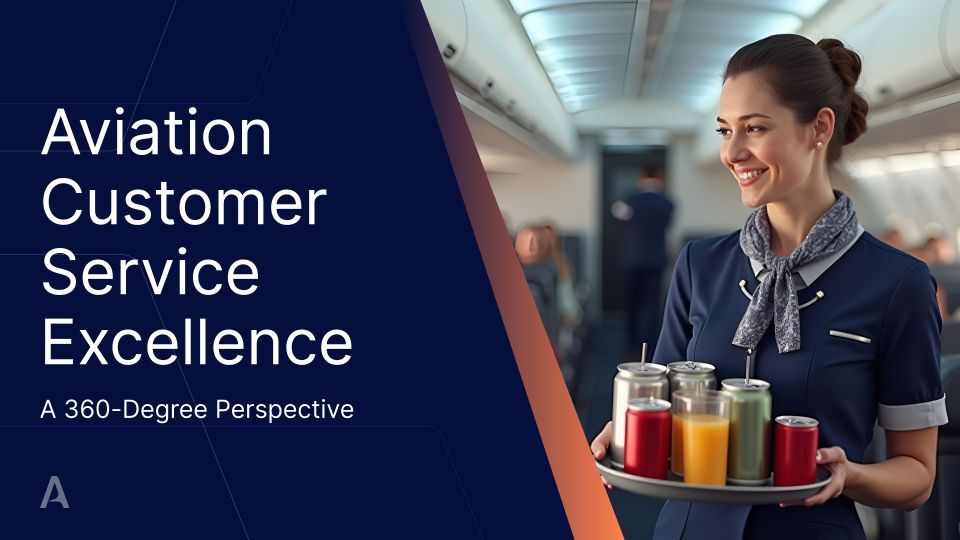
Aviation Customer Service Excellence: A 360-Degree Perspective
Deliver exceptional end-to-end customer experiences across the aviation ecosystem through deeper service understanding, improved coordination, communication, and quality management.
Course description
Learning outcomes
Who should attend
Meet your instructor

Jörg Troester
Jörg Troester has more than 25 years of experience in the aviation industry. As Head of Corporate Strategy Jörg is responsible for Hahn Air’s strategic development and represent the company at various industry associations as well as towards governmental organizations. Jörg also works as a guest lecturer at different universities and international organizations.
Before joining Hahn Air Lines, he worked for over ten years with LTU International Airways in various positions in project management and product development in the areas of distribution, sales & marketing and IT.
Jörg holds a Master’s Degree in linguistics and media science, an MBA in tourism and hospitality and LL.M. in Commercial law.
Develop customer-focused CRM strategies to ensure your airline has a competitive advantage regarding cost and revenue.
Why you should attend?
Aviation customers are more informed, more connected, and more selective than ever. Their expectations extend well beyond safety and punctuality - they demand personalized, efficient, and empathetic service throughout their journey. This has intensified in the post-pandemic operating environment, where disruptions, staffing shortages, and heightened travel complexity challenge traditional service models.
With multiple stakeholders influencing each customer touchpoint, collaboration and visibility across the end-to-end journey have become critical. As digital tools and AI reshape engagement, organizations that prioritize service design, quality management, coordinated communication, and human-centered interaction are best positioned to build loyalty and remain competitive.
Customer service excellence is no longer a differentiator - it is a strategic requirement for commercial success, brand trust, and passenger retention.
Related courses
Aeroclass offers online courses from leading industry professionals. Learn anytime, anywhere, and master practical skills to advance your career.

 resize.JPEG)


- Online or On-site
Explore and optimize every stage of the customer journey to strengthen direct sales channels and generate additional revenue opportunities.


- Video Course
Discover how to design, manage, and improve the end-to-end customer journey for a seamless airline experience.

- Video Course
Learn how to plan, conduct, and report effective product and service audits to improve customer experience, identify issues proactively, and enhance organizational performance.

 resize.JPEG)

Lift your aviation career off the ground
- Check your knowledge with quizzes
- Study on different devices
- Aviation management courses
- Certified courses
- Classes
- Obtain Aeroclass Certificate