Fundamentals of Aviation Law
Develop a practical understanding of the legal principles, international agreements, and regulatory frameworks that govern modern aviation operations and commercial activities.

Course description
Aviation law forms the legal foundation of global civil aviation, governing how aircraft operate, how States regulate airspace, and how airlines, airports, manufacturers, and service providers interact within an international system. From international treaties and regulatory oversight to liability, passenger rights, and commercial operations, aviation law influences nearly every aspect of the industry.
This training provides a structured introduction to the legal and regulatory frameworks that shape modern aviation. Participants will explore the international legal architecture established through the Chicago Convention system, the role of ICAO and national regulators, and the legal principles governing airworthiness, operations, liability, and safety oversight.
The class also examines commercial and operational legal issues affecting airlines and aviation stakeholders, including passenger rights, aircraft leasing, accident investigation, aviation security, and dispute resolution. Emerging topics such as drones, urban air mobility, environmental regulation, and cybersecurity are addressed to help participants understand how aviation law continues to evolve alongside technological and operational change.
Through practical examples and case-based discussion, participants will gain the ability to interpret key legal concepts, understand regulatory obligations, and apply aviation law principles to operational and commercial scenarios.
Learning outcomes
By the end of this class, participants will be equipped to:
- Identify and explain the primary sources of aviation law, including treaties, regulations, and industry standards
- Describe the roles and responsibilities of international and national aviation regulators such as ICAO, FAA, and EASA
- Interpret key provisions of major international instruments, including the Chicago Convention and Montreal Convention
- Assess liability and passenger rights issues related to carriage by air, delays, baggage, and cargo operations
- Explain legal and regulatory principles related to aircraft registration, leasing, certification, and operational compliance
- Apply aviation law concepts to safety oversight, accident investigation, aviation security, and emerging technologies
Who should attend
- Aviation lawyers and legal professionals
- In-house counsel at airlines, airports, leasing companies, and manufacturers
- Civil Aviation Authority and government personnel
- Aviation managers and operational executives
- Airport and airline personnel
- Aviation safety, compliance, and quality professionals
- Aircraft leasing, finance, and insurance professionals
- Pilots and aviation operations personnel
- Law, business, and aviation students
- Anyone seeking a structured understanding of aviation law and regulation
Meet your instructor

Koussai Mrabet
Dr. Habib Koussai Mrabet is a senior aviation advisor and air transport executive with more than 25 years of experience across airline management, aeropolitical affairs, commercial strategy, and aviation policy. Throughout his career, he has held leadership positions with Qatar Airways, Tunisair, the African Airlines Association (AFRAA), and the Tunisian Civil Aviation Authority.
A widely respected advocate for aviation development in Africa, he has played a key role in advancing air transport liberalization, negotiating international air services agreements, and supporting airline growth and restructuring initiatives. His work has involved close collaboration with governments, civil aviation authorities, airlines, and international organizations including ICAO, IATA, AFCAC, the African Union, and AACO.
Currently serving as Chairperson of the Administrative Council of the Dispute Settlement Mechanism of the Yamoussoukro Decision and the Single African Air Transport Market (SAATM), he continues to contribute to the development of aviation policy, regulatory frameworks, and sustainable air transport growth across Africa and beyond.
Why you should attend?
The aviation industry operates within one of the most internationally interconnected legal systems in the world. Airlines, airports, manufacturers, and regulators must continuously navigate evolving requirements related to safety, liability, passenger rights, environmental obligations, cybersecurity, and international operations.
At the same time, rapid technological change - including drones, urban air mobility, autonomous systems, and digitalization - is creating new legal and regulatory challenges that require aviation professionals to understand not only operational realities but also the legal frameworks supporting them.
Understanding aviation law is therefore essential for professionals involved in aviation management, regulation, operations, finance, safety, and commercial activities. This training provides the legal and regulatory foundation needed to interpret obligations, manage compliance, and make informed decisions within a complex global aviation environment.
Related courses
Aeroclass offers online courses from leading industry professionals. Learn anytime, anywhere, and master practical skills to advance your career.

- Video Course
Writing a safety investigation report is a key element of the investigation process. No matter how much time, effort or funding has gone into an investigation a poorly written report will devalue the entire investigation process.

- Online or On-site
Explore how people, technology, and organizations interact in airport operations. Learn to manage error, fatigue, decision-making, and leadership to strengthen safety.

- Online or On-site
Gain a structured understanding of aviation Search and Rescue systems, coordination, planning, and reporting to support effective SAR operations from alert to mission closure.

- Video Course
Discover how aviation is tackling environmental challenges through innovation, sustainability, and new technology.

- Online or On-site
Explore and optimize every stage of the customer journey to strengthen direct sales channels and generate additional revenue opportunities.
- Online or On-site
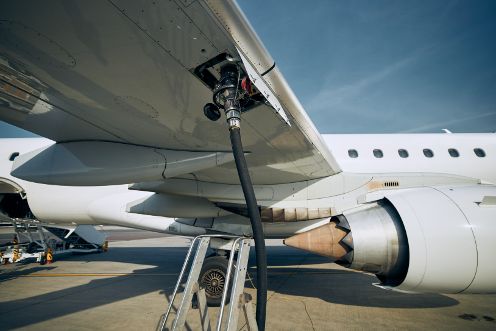
Develop the knowledge and practical skills needed to supervise aircraft refuelling operations with passengers on board, ensuring compliance with safety procedures and effective emergency preparedness.

- Video Course
Gain a practical overview of airport processes, regulations, stakeholders, and passenger handling to ensure safe and efficient terminal and airside operations.
 resize.JPEG)
- Video Course
Keep up with the latest updates in the evolving Safety Management Systems (SMS). Ascertain that you can assess and manage risks to improve your system’s overall productivity and compliance.
- Online or On-site
Explore and build AI use cases to modernize your work with automated insights and data-driven decision-making.

Lift your aviation career off the ground
- Check your knowledge with quizzes
- Study on different devices
- Aviation management courses
- Certified courses
- Classes
- Obtain Aeroclass Certificate