Sustainable Aviation Fuels (SAF) – Opportunities and Challenges Ahead
Level up your SAF knowledge with this video course on SAF, focusing on the opportunities and challenges industry has to face to speed up this development (context, availability, economics, environmental benefits).
.JPEG)
Course description
Learning outcomes
Who should attend
Meet your instructor
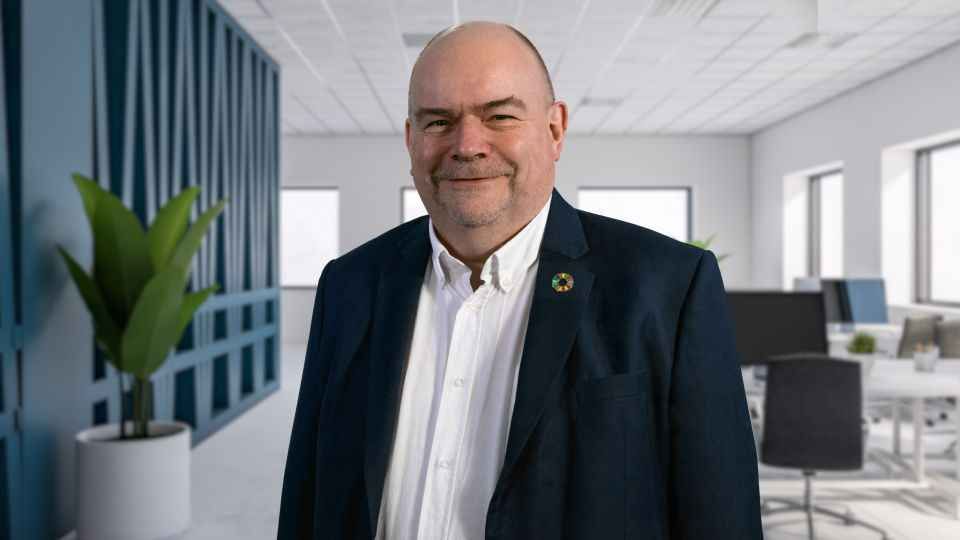
Philippe Fonta
Philippe Fonta has 30 years of experience with private companies, international institutions, policy-making bodies, and non-governmental organizations. Philippe graduated from the French Civil Aviation School (ENAC) as an aeronautical engineer in 1990 and from the Haute Ecole de Gestion of Geneva where he received the Diploma of Advanced Studies Management Durable in 2019.
Philippe started his career at Airbus, one of the two major aircraft manufacturers, where he successively undertook roles and responsibilities in Engineering (structural tests), Product Support (operational documentation for pilots and flight planning preparations), and Commercial (Performance route studies to support sales campaigns) directorates. He was then Airbus’ Director of Environment and Head of Sustainable Development. In addition, he acted as the official observer for all aircraft manufacturers in the process of developing environmental norms and standards within the framework of CAEP (Committee on Aviation Environmental Protection of the International Civil Aviation Organization (ICAO), the UN Specialized Agency for all civil aviation matters. He contributed to the working groups that initiated the work on Sustainable Aviation Fuels and on market-based measures to mitigate climate change, a group that led to the definition and implementation of CORSIA (Carbon Offsetting and Reduction Scheme for International Aviation).
Philippe then brought his technical engineer background and his experience in economic scenarios and international cooperation to the cement sector, leading the Cement Sustainability Initiative (CSI), one of the flagship projects of the World Business Council for Sustainable Development (WBCSD) in Geneva. Created in 1999, the CSI was a collaborative platform to collectively address key sustainable development issues for the cement sector. Gathering about 25 cement leading manufacturers worldwide, the platform was covering about 30% of the cement manufacturing market. During his career at the WBCSD, he also led projects like the Tire Industry Project (TIP) and Energy Efficiency in Building (EEB), broadening the scope of his expertise to the mobility and construction sectors.
In early 2019, Philippe decided to start a new career as an expert consultant through a company he created in Geneva under the name of SCRUM-consult, where SCRUM stands for Sustainability, Corporate Responsibility, and Uncertainties Management. He advises corporate entities, organizations, and platforms on their paths towards sustainability.
Related courses
Aeroclass offers online courses from leading industry professionals. Learn anytime, anywhere, and master practical skills to advance your career.

- Video Course
Writing a safety investigation report is a key element of the investigation process. No matter how much time, effort or funding has gone into an investigation a poorly written report will devalue the entire investigation process.
- Online or On-site
Explore how people, technology, and organizations interact in airport operations. Learn to manage error, fatigue, decision-making, and leadership to strengthen safety.
- Online or On-site
Gain a structured understanding of aviation Search and Rescue systems, coordination, planning, and reporting to support effective SAR operations from alert to mission closure.

- Video Course
Discover how aviation is tackling environmental challenges through innovation, sustainability, and new technology.

- Online or On-site
Explore and optimize every stage of the customer journey to strengthen direct sales channels and generate additional revenue opportunities.
- Video Course
Gain a practical overview of airport processes, regulations, stakeholders, and passenger handling to ensure safe and efficient terminal and airside operations.
 resize.JPEG)
- Video Course
Keep up with the latest updates in the evolving Safety Management Systems (SMS). Ascertain that you can assess and manage risks to improve your system’s overall productivity and compliance.
- Online or On-site
Explore and build AI use cases to modernize your work with automated insights and data-driven decision-making.

Lift your aviation career off the ground
- Check your knowledge with quizzes
- Study on different devices
- Aviation management courses
- Certified courses
- Classes
- Obtain Aeroclass Certificate